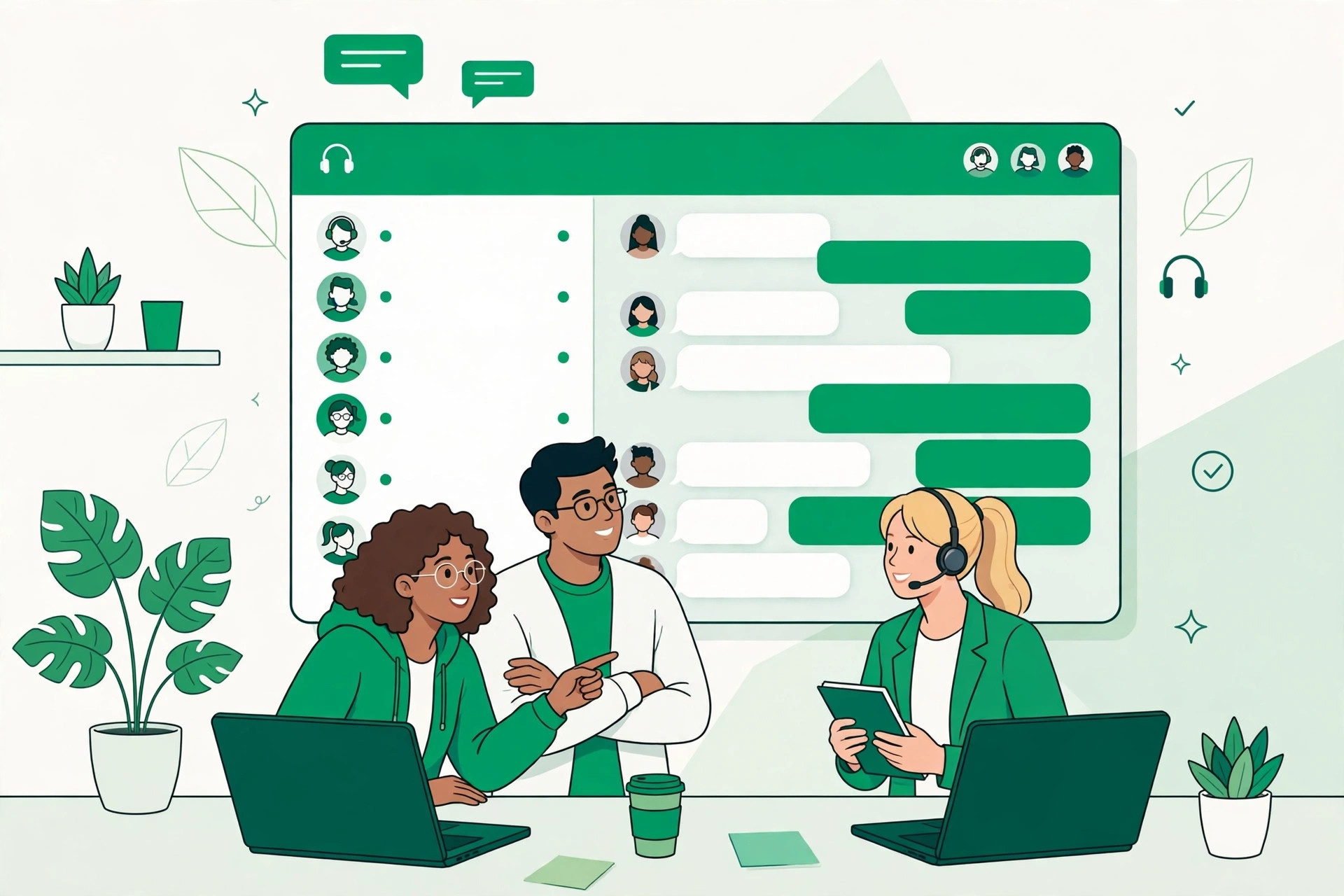
WhatsApp Drip Campaigns: Nurture Leads on Autopilot
A WhatsApp drip campaign is a timed sequence of messages that nurtures each lead automatically, from first welcome to final offer. This guide walks through triggers, message mapping, timing best practices, and proven sequence examples for ecommerce, SaaS, education, and services.
What Is a WhatsApp Drip Campaign?
A drip campaign is a series of messages sent automatically over time, each one triggered by the previous step or by the contact's behavior. Think of it as a conversation that unfolds on a schedule you design once — and then runs by itself for every new lead.
A simple example: someone signs up for your free trial. Day one, they get a welcome message with a quick-start tip. Day three, a message asks how the setup is going and links a tutorial. Day seven, they get an invitation to book a demo. If they reply at any point, a human (or your team inbox) takes over. If they go quiet, the sequence keeps nurturing.
Drips differ from one-off broadcasts. A broadcast is a single announcement to many people. A drip is a journey: personalized, sequenced, and timed to where each contact is in their decision process.
Why WhatsApp Is Perfect for Drip Campaigns
Email drip campaigns have existed for years, but WhatsApp changes the math in three ways.
First, visibility. WhatsApp messages are opened far more reliably than marketing emails. When your third email in a nurture sequence sits unopened, the sequence stalls. On WhatsApp, each step actually gets seen, so the compounding effect of a sequence is much stronger.
Second, conversation. Email drips are one-way by design. WhatsApp drips invite replies — and every reply is a buying signal you can act on immediately. A prospect who answers your day-three check-in is telling you they are engaged. Route that conversation to sales right away instead of waiting for day seven.
Third, timing flexibility. WhatsApp supports rich, timely triggers: a message the moment someone abandons a cart, a reminder one hour before an appointment, a follow-up the day a trial expires. Drips tied to real behavior beat drips tied to the calendar.
How to Set Up a Drip Sequence
Building a drip campaign comes down to four decisions. Get these right and the rest is execution.
1. Choose Your Trigger
Every drip starts with an event. Common triggers include: a new lead from a form or ad, a trial signup, a first purchase, an abandoned cart, a webinar registration, or a support ticket closing. The trigger defines the audience — only people who took that action enter the sequence.
Start with your highest-value trigger. For most businesses that is either new-lead follow-up (speed matters enormously here) or abandoned-cart recovery (the intent is already proven).
2. Map the Steps
Write out the full journey before touching any software. For each step, define the message, the delay after the previous step, and the exit conditions. A typical nurture sequence has three to five steps:
- Step 1 — Welcome (immediate). Confirm the trigger action, set expectations, deliver any promised value.
- Step 2 — Value (day 2–3). A useful tip, guide, or social proof. No hard sell yet.
- Step 3 — Nudge (day 5–7). Address the most common objection or share a relevant example.
- Step 4 — Offer (day 8–10). A clear call to action: book a call, claim a discount, start a trial.
- Step 5 — Breakup (day 12–14). A polite final message: "Should I close your file?" This often gets the highest reply rate of the whole sequence.
Keep each message short — two to four lines. WhatsApp is a chat app, not an inbox for essays.
3. Set Exit Rules
A drip must stop when it has done its job. Define exits: the contact replies (route to a human), the contact converts (move to an onboarding sequence instead), or the contact opts out (stop everything immediately and respect it). Nothing damages trust like a nurture sequence that keeps selling to someone who already bought.
4. Connect Your Data
The best drips pull live data from your systems: the lead's name, the product they viewed, their cart contents, their trial expiry date. Connect your CRM, store, or booking system so messages reference real details. "Your trial ends tomorrow" outperforms "Your trial is ending soon" every time.
Timing Best Practices
- Strike fast on step one. The first message should fire within minutes of the trigger, especially for new leads. Interest decays quickly.
- Space steps 2–4 days apart. Daily messages feel like pressure; weekly messages lose momentum. Two to four days is the sweet spot for most nurture sequences.
- Respect local time. Schedule marketing steps for daytime hours in the recipient's timezone. Early-morning or late-night promotional messages get you blocked.
- Cap the sequence. Five to seven steps is plenty. If someone has not engaged after that, move them to a long-term re-engagement list rather than continuing the same sequence.
- Pause on engagement. The moment a contact replies with real interest, pause the automation and let a human continue.
Drip Campaign Examples by Industry
Ecommerce: Abandoned Cart Recovery
Trigger: cart abandoned for one hour. Step one reminds the shopper what they left behind, with a direct checkout link. Step two, a day later, answers the top hesitation (shipping time, returns policy). Step three, on day three, offers a small time-limited incentive. Because the intent is already high, even simple cart sequences recover meaningful revenue.
SaaS: Trial-to-Paid Nurture
Trigger: trial signup. Step one welcomes the user and points to the single most important setup action. Step two shares a two-minute tutorial for the feature most correlated with conversion. Step three, near trial end, offers a personal walkthrough. The goal is activation, not just awareness — every step should move the user one action closer to value.
Education: Course Enrollment Follow-Up
Trigger: brochure download or inquiry. Step one delivers the brochure and asks about the caller's goal. Step two shares a student outcome relevant to that goal. Step three invites them to a free counseling session. Education decisions take weeks, so longer sequences with genuine value at each step work best here.
Services: Quote Follow-Up
Trigger: quote sent but not accepted. Step one, next day: "Any questions on the quote?" Step two, day four: a brief example of similar work completed. Step three, day eight: a polite check-in offering to adjust scope or timing. Most service businesses lose deals to slow follow-up, not to competitors — a drip fixes that permanently.
Measuring Drip Performance
Track these numbers for every sequence: delivery rate, open rate, reply rate per step, conversion rate, and opt-out rate per step. A step with high opt-outs is telling you something — usually that the message is too salesy, too frequent, or mistimed. Rewrite or remove it.
Compare sequences against a control group that receives no drip. The lift in conversion is the true value of the campaign, and it is what justifies expanding automation to more triggers.
Getting Started This Week
Do not try to build five sequences at once. Pick one trigger — new leads or abandoned carts — write four short messages, set the timing, define the exits, and launch. Watch the first fifty contacts go through, read every reply, and refine. Once one sequence converts reliably, cloning the pattern to new triggers takes hours, not weeks.
Platforms like SocialGeniex include visual drip builders, so you can design sequences without code, connect them to your lead sources, and hand conversations to your shared inbox the moment a prospect engages. See pricing plans to start small and scale as your sequences prove themselves.
Frequently Asked Questions
How many messages should a WhatsApp drip campaign have?
Three to five messages works for most goals. Fewer than three rarely builds enough momentum; more than seven risks fatigue and opt-outs. Match the length to the decision cycle.
Will drip campaigns get my WhatsApp number banned?
Not if you follow the rules: message only opted-in contacts, use approved templates for marketing messages sent via the API, keep frequency reasonable, and honor opt-outs instantly. Bans come from spam behavior, not from legitimate nurture sequences.
Can I personalize drip messages for each contact?
Yes. Modern platforms let you insert variables like name, product viewed, or appointment time from your CRM or store data. Personalized drips consistently outperform generic ones.
What is the difference between a drip campaign and a broadcast?
A broadcast is one message sent to many people at once — an announcement. A drip is a timed sequence where each contact progresses through steps based on triggers and behavior. Use broadcasts for news and offers; use drips for nurturing journeys.